
Last updated October 17, 2026
 Sliding glass doors
 Single hung
 Double hung
 Horizontal roller
 Casement
 Bay & bow
 Entry doors
 Impact garage doors
 PGT
PGT CGI
CGIFree in-home measure and quote - PGT, CGI and CWS impact lines compared on your actual openings, style by style
Get your free estimateWindows & Doors Cost Breakdown: The San Francisco Homeowner’s Reference for 2026
Most San Francisco window cost guides give you a range so wide it’s useless: $300 to $1,500 per window. You can’t budget with that. The single biggest cost variable in a San Francisco window replacement isn’t the glass, the frame material, or even the brand. It’s access. A second-floor unit in a Richmond District Edwardian flat with interior-only access adds $400 – $700 per window in labor before anyone touches a product. This guide names the seven variables that actually move your project from the low end to the high end, so you can estimate your own job before calling for quotes. For a deeper dive, see our complete guide to windows & doors in San Francisco. By the end, you’ll know what a Sunset bungalow window costs versus a Noe Valley Victorian full replacement, what San Francisco permits actually run, and why a written price protects you in dollar terms.
Styles & brands we work with
Quick Answer
Window replacement in San Francisco costs $600 – $1,800 per window in 2026, and door replacement runs $1,200 – $4,500 per opening, with the final number driven mainly by access complexity, frame condition, permit requirements, and product tier. A single basic vinyl window with easy first-floor access might land near $600, while a second-floor wood-clad casement in a historic district can push past $1,800. The range isn’t random. Seven specific variables determine where your job lands, and each one is explained below with real San Francisco numbers.
Table of Contents
- The Seven Cost Variables, Ranked by Price Impact
- Frame Material Benchmarks for 2026
- Operating Style Costs: Single-Hung Through Fixed
- San Francisco Permit Costs and How to Estimate Them
- What a Written Price Protects You From
- Three Real San Francisco Estimates
- Common Mistakes to Avoid
- When to Call a Professional
- Frequently Asked Questions
- The Bottom Line
The Seven Cost Variables, Ranked by Price Impact
Every window and door estimate in San Francisco is shaped by seven factors. Knowing them in order of impact helps you read a quote intelligently and spot where money is being spent versus where it’s being lost.
1. Access Complexity
This is the variable most guides ignore entirely, and it’s the one that hits hardest in San Francisco. Our housing stock is dense. Row houses share walls. Edwardian and Victorian flats stack two or three units. A window on the first floor with a clear walk-up path is a straightforward job. A second-floor window on a Richmond District Edwardian with no exterior scaffolding access means the crew works from inside, protects the floors and stairwells, and removes the old sash through the interior. That adds $400 – $700 per window. Third-floor windows can add more. If a ladder can’t reach the opening safely, interior-only removal is the only option, and it’s slower, careful work. Before you ask for an estimate, note which windows face a street or a shared light well versus a back yard or roof access. That detail alone can swing a five-window job by $2,000.
2. Frame Condition and Repair Before Installation
San Francisco’s fog and marine air are hard on wood. A window frame that looks fine from inside may have dry rot at the sill, soft wood around the jamb, or water damage behind the trim. When a new window goes into a rotting frame, the frame fails before the glass does. The installer has to cut out damaged sections and rebuild them before setting the new unit. This runs $150 – $400 per window depending on how far the rot goes. In older Sunset and Mission District homes, we regularly see sills so far gone they crumble when tapped. The fix isn’t optional, but it should be priced before work starts, not discovered mid-job and added to the bill. That’s the difference between a quote that holds and one that grows.
3. Permit Fees and Inspection Scheduling
San Francisco Department of Building Inspection (DBI) requires permits for window replacement when the opening size changes or when the work is structural. Same-size replacement may not need a permit, but that’s a question for DBI, not for a salesperson. When a permit is required, the fee is based on the project’s declared valuation. More on that in the permit section below. The cost runs anywhere from $200 to $800 for a typical window job, plus the time spent waiting for inspection. Inspection scheduling adds days, not dollars, to the job, but it’s a real variable in a city where DBI queues can stretch.
4. Historic District Compliance
If your home sits in a designated historic district, or if it’s a contributing structure to one, window replacement comes with constraints. You may be required to match the original material, profile, and finish. A wood window that matches a 1910 Craftsman is a different product than a stock vinyl unit, and it costs accordingly. The approval process itself adds time and paperwork before a single window is ordered. Not every older home is in a historic district, but enough of San Francisco is that this variable matters. If you own a Victorian in a protected area, budget 30 – 50% more for compliant product choices.
5. Product Tier Within a Brand Family
Every manufacturer we work with, including PGT and CWS, offers a range of tiers within its product line. The entry tier is a solid, code-compliant window. The mid tier adds better glass packages, stronger frames, and tighter air infiltration numbers. The top tier brings laminated glass, impact ratings, and custom interior finishes. The same size window can move $200 – $600 per unit across these tiers. PGT’s entry vinyl and PGT’s higher-end impact line are very different products, and the price reflects that. The honest way to think about it: the tier doesn’t change whether the window works; it changes how it performs over 20 years and how it holds up in San Francisco’s wind and fog exposure.
6. Disposal and Haul-Away
Every old window has to leave your property. Disposal costs $30 – $75 per window, but San Francisco’s waste rules can complicate things in multi-unit buildings. Some buildings require debris to go through specific chutes or at specific hours. If a haul-away requires a scheduled pickup rather than a truck bed, that’s a line item. It’s small compared to access and frame repair, but good estimates don’t bury it. A written price should tell you where the old windows go and what it costs.
7. Crew Size Relative to Job Scope
Most window replacements are two-person jobs. A large slider or a heavy wood fixed window might require three. The cost difference is modest, maybe $150 – $300 per day, but it matters on a one-day job. The larger implication is scheduling. A three-person crew can do five windows in a day; a two-person crew might need a day longer. The labor total is similar, but the time your home is disrupted isn’t. When you’re getting estimates, ask how many people will be working and how many days they’ll be there. A clear answer is a good sign.
Frame Material Benchmarks for 2026
Frame material is where most cost guides start, and it’s useful, but only if you understand what each material buys in San Francisco’s specific conditions. Our climate is humid, foggy, and windy. We don’t get desert heat or Midwest freeze-thaw cycles. That means moisture resistance and air sealing matter more than extreme temperature performance.
Vinyl
2026 price range: $450 – $900 per window installed. Vinyl frames are the most common entry point. They handle moisture well, they don’t rot, and they require almost no maintenance. The trade-off is appearance and frame thickness. Vinyl frames are chunkier than wood or aluminum, which means slightly less visible glass area. For a Sunset bungalow or a rental unit, vinyl is often the right call. PGT’s vinyl lines run from solid entry-level to higher-end insulated frames with better glass packages.
Fiberglass
2026 price range: $800 – $1,400 per window installed. Fiberglass frames expand and contract at nearly the same rate as glass, which makes them exceptionally stable in San Francisco’s temperature swings between ocean fog and afternoon sun. They take paint well, so they can match an older home’s trim. They cost more than vinyl and less than wood. For coastal exposure on the west side of the city, fiberglass is a strong middle ground.
Aluminum-Clad Wood
2026 price range: $1,100 – $1,800 per window installed. This is where historic-district work tends to land. You get a wood interior you can stain or paint and an aluminum exterior that stands up to San Francisco’s damp air. The wood gives you the look and sound quality older homes deserve; the aluminum means you aren’t repainting the outside every few years. For a Noe Valley Victorian, this is often the right product tier. Expect these prices to trend slightly upward in 2026 as wood costs continue to climb.
All-Wood
2026 price range: $1,200 – $2,200 per window installed. All-wood windows are what many historic district requirements actually dictate. They are beautiful and they are a maintenance commitment. If the district says wood, you’re buying wood. The cost includes careful finishing and, weather depending, protective treatment for the exterior. Not every home needs this. But if yours does, the price is what it is, and it’s not a place to cut corners.
Operating Style Costs: Single-Hung Through Fixed
How a window opens affects both the product price and the labor to install it. Here are the 2026 benchmarks for San Francisco, assuming mid-tier vinyl or fiberglass and first-floor access.
Single-Hung
$500 – $850 per window. The bottom sash moves; the top stays fixed. Common in San Francisco bungalows and older homes. The simplest operating window to install, which keeps labor at the low end.
Double-Hung
$550 – $950 per window. Both sashes move. Slightly more product and hardware, and the balance system adds a little to the price. These are common in Victorians and Edwards, where the double-hung profile matches the original architecture.
Casement
$700 – $1,200 per window. Crank-operated, swings outward. Casements seal tighter than hung windows because the sash compresses against the frame when closed. That’s a real benefit in windy neighborhoods like the Outer Sunset. The hardware is more complex, and the installation requires more precise alignment.
Slider
$600 – $1,100 per window. Horizontal sliding panels. Common in mid-century and newer San Francisco construction. The measurements tend to be wider, which means more glass and more product cost. Labor is straightforward.
Fixed (Picture)
$500 – $1,000 per window. No moving parts, so the product is often cheaper. But fixed windows are usually large, and large glass means thicker glazing and heavier handling. In a Noe Valley Victorian with a big picture window facing east, you’re paying for the glass area and the care it takes to set it without damaging surrounding trim.
San Francisco Permit Costs and How to Estimate Them
San Francisco’s DBI uses a valuation-based fee schedule. That means the permit fee is a percentage of the declared value of the work, where the declared value includes both materials and labor. A $10,000 window project with $4,000 in labor has a declared valuation of $14,000, and the permit fee is based on that number.
Here’s the process:
- Calculate the total project cost, including all materials and labor.
- Check DBI’s current fee schedule, which changes periodically. For 2026, residential window and door permits generally run $200 – $800 for typical projects.
- If your project involves structural changes, such as enlarging an opening or adding a header, the fee and the review process both increase.
- Budget for inspection scheduling time. After the work is done, an inspector must sign off, and the wait can be a few days to a few weeks depending on DBI volume.
Some homeowners ask whether they can skip the permit. The short answer: unpermitted window replacements become a problem when you sell. Buyers’ inspectors look for permit history. If the new windows don’t match the DBI record, it can stall a sale. The permit cost is a fraction of the headache it prevents. Any window company that suggests otherwise is not doing you a favor.
For more on how San Francisco window work fits into broader home planning, see our window replacement guide for San Francisco homeowners.
What a Written Price Protects You From
A written price before any work starts isn’t a sales tactic. It’s a financial safeguard. In San Francisco window and door work, there are three common mid-project cost additions, and a fixed written scope eliminates every one.
Change #1: The Frame Surprise
The crew pulls the old window and finds the sill is compromised. Without a written scope, this becomes a change order: $350 to rebuild the sill, plus materials. With a proper pre-installation inspection and a written price that includes frame repair, the cost was already in the estimate. We inspect every opening before we price the job, which is why our written numbers hold.
Change #2: The Disposal Fee
Some estimates price the window but not the removal of the old one. Then a truck shows up, and haul-away is a separate line item. A written price should name disposal explicitly. If it doesn’t, ask. This is a $30 – $75 per window line item that shouldn’t be a surprise.
Change #3: The Hardware Upgrade
You agreed to a casement window, but the quote didn’t specify the crank hardware. The installer brings a standard crank; the upgrade is $80 more per window. A written price should list the product by brand, model, and finish. That’s the only way to compare quotes honestly.
At Lightwell Windows San Francisco, the Cedarwell Care Promise includes a written price before any work starts. No invoice surprises, no end-of-day additions. It’s the same reason we put shoe covers and drop cloths on every visit and send a photo of the clean-up before the crew leaves. The job should end the way the estimate said it would.
Three Real San Francisco Estimates
These are representative 2026 numbers for actual San Francisco housing types. They assume mid-tier product selection and no unexpected structural surprises.
Scenario 1: Single Foggy Double-Hung Replacement in a Sunset Bungalow
- Scope: One double-hung window, first floor, easy access from the front yard.
- Product: Mid-tier vinyl double-hung, low-E glass, standard sizing.
- Product cost: $450
- Labor and installation: $300
- Disposal: $40
- Permit: Not required for same-size replacement.
- Total: $790
Scenario 2: Full Five-Window Replacement in a Noe Valley Victorian
- Scope: Five double-hung windows, second floor, interior-only access, one frame requiring rot repair.
- Product: Aluminum-clad wood double-hung to match original profiles.
- Product cost: $1,300 × 5 = $6,500
- Labor and installation: $500 × 5 = $2,500 (includes interior-only access premium)
- Frame repair: $300 for one sill rebuild.
- Disposal: $50 × 5 = $250
- Permit: $450
- Total: $10,000
Scenario 3: Front Door and Sidelight Replacement in a Mission Edwardian
- Scope: One entry door with a fixed sidelight, ground floor, standard width.
- Product: Mid-tier fiberglass entry door from Therma-Tru with decorative glass sidelight.
- Product cost: $2,200 for door and sidelight.
- Labor and installation: $1,200 (includes removal of existing unit and hardware transfer).
- Disposal: $80
- Hardware: $250 (new lockset and deadbolt, installed).
- Permit: $300
- Total: $4,030
These are estimates, not quotes. Every home is different, and the only way to get a real number for your specific windows or door is a site visit. But these figures give you a baseline to compare against when quotes come in.
Common Mistakes to Avoid
- Comparing quotes without matching product tiers. A $600 vinyl quote and a $1,400 wood-clad quote aren’t the same project. Make sure every quote lists the brand, model, and glass package before you compare prices.
- Assuming every older San Francisco home is in a historic district. Many aren’t, but many are. Check your address against the San Francisco Planning Department’s historic resource map before you fall in love with a product that won’t be approved.
- Budgeting only for the windows, not the access. If your replacement involves a second-floor unit, a shared light well, or interior-only removal, the labor goes up. Ignore this and your budget will be off by thousands, not hundreds.
- Skipping the permit. It’s tempting to save a few hundred dollars. It’s a false economy when the unpermitted work shows up during a home inspection and stalls a sale.
- Accepting a verbal estimate as final. A verbal number isn’t a price. Get it in writing, with the scope itemized. If a company won’t put the number on paper before starting, that’s your answer.
- Choosing the cheapest product because it looks like the expensive one from the curb. Vinyl and wood-clad look similar from outside, but they perform and age very differently. You’ll live with the choice for 15 to 30 years.
- Not asking who will be in your home. You should know whether the installers are background-checked employees or day laborers. At Lightwell Windows San Francisco, every technician is background-checked and uniformed, so you know who’s at your door before they knock.
When to Call a Professional
If you have fogged double-pane glass, a window that won’t open without a fight, visible frame rot anywhere around the opening, or drafts that move your curtains on windy days, it’s time to get professional eyes on it. See our Windows & Doors Warning Signs: A San Francisco Homeowner’s Reference Guide for a full checklist. If you’re considering multiple windows rather than one, the pricing variables compound, and a written estimate becomes even more valuable. The same applies to doors: a front door that sticks, lets light through the weatherstripping, or shows warping isn’t going to fix itself. Lightwell Windows San Francisco offers free estimates in San Francisco, with a written price before any work starts. Call (831) 480-4124 to schedule yours.
Frequently Asked Questions
Window replacement in San Francisco runs $600 – $1,800 per window in 2026, depending on access, frame condition, product tier, and permit status. Most mid-tier replacements on a first floor land between $700 and $1,100. Call (831) 480-4124 to get a written price for your specific openings.
A new front door in San Francisco costs $1,200 – $4,500 installed in 2026, with the range driven by the door material, whether a sidelight is included, and how much the existing frame needs repair. A mid-tier fiberglass entry door with a sidelight typically lands near $4,000.
San Francisco requires a permit when the window opening changes size or when the work is structural. Same-size replacements often don’t need a permit, but it’s worth checking with DBI before work starts. Permit fees for typical window projects run $200 – $800.
The most expensive variable in San Francisco window replacement is usually access complexity. A second-floor window with interior-only access adds $400 – $700 per window in labor alone, before any product cost. Frame repair and historic district compliance are the next biggest movers.
It shouldn’t. That’s why a written price before any work starts matters. At Lightwell Windows San Francisco, the Cedarwell Care Promise means the written price holds, with no change orders unless you approve a scope change in advance.
A typical single-family home window replacement takes most of a day. A full five-window job is usually one to two days depending on access and frame condition. Doors are faster, often half a day for a standard entry. Call (831) 480-4124 for a realistic schedule for your home.
The Bottom Line
San Francisco window and door costs in 2026 range from $600 to $1,800 per window and $1,200 to $4,500 per door, but those ranges mean nothing without knowing the seven cost variables behind them. Access complexity, frame condition, permits, and historic district rules move the needle more than glass or frame material. Get a written price before any work starts. Know what tier of product you’re being quoted. Verify the access assumptions. And when you’re ready to move forward with a San Francisco window or door project, choose a company that names every price in writing and treats your home like a home. For more on what goes into a proper installation, see our window installation services in San Francisco or our San Francisco door installation guide.
Written by Keith Yamada, Owner at Lightwell Windows San Francisco, serving San Francisco since 2010.
See the difference
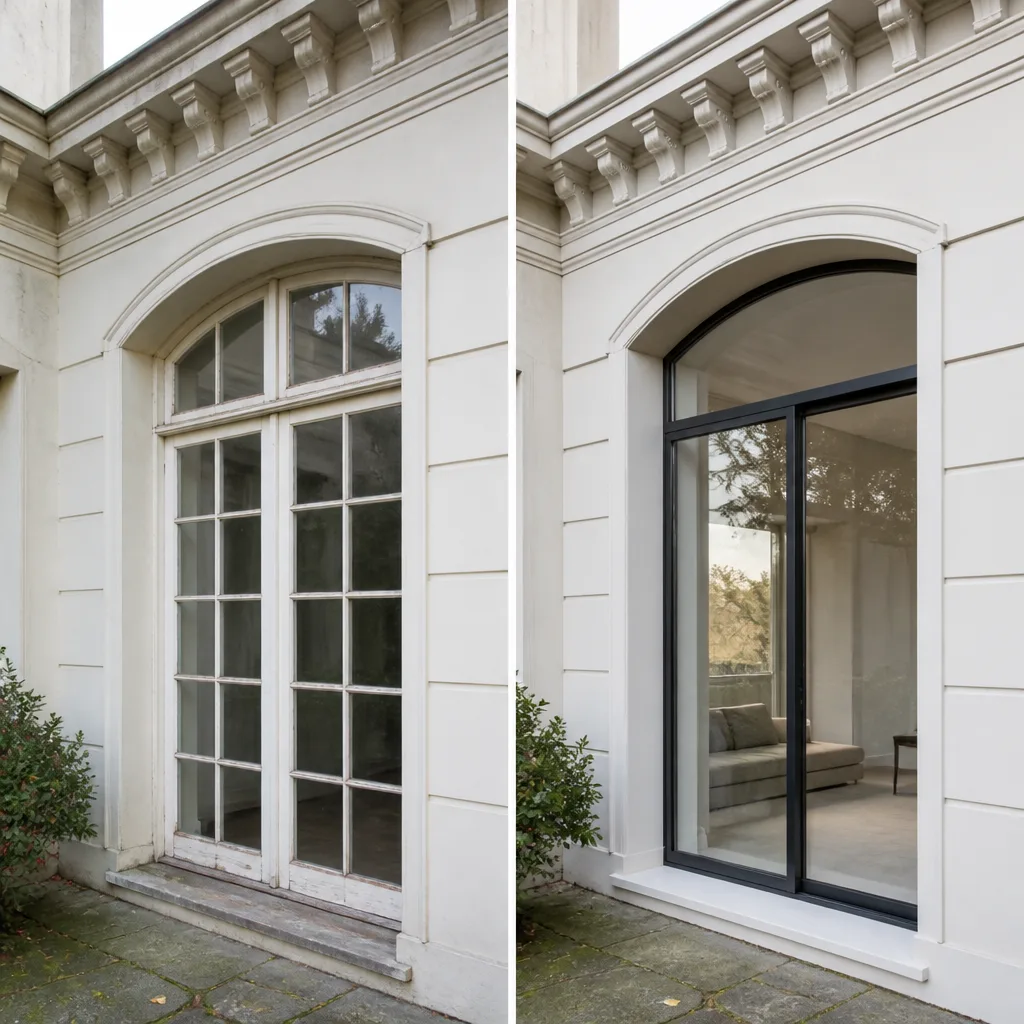
 Before
 After
After Before
 After
After Before
 After
AfterSix Reasons Homeowners Choose Lightwell Windows San Francisco
Laminated glass and reinforced frames hold up to wind-driven rain, hail and flying debris, so your openings stay sealed when the weather turns.
Low-E insulated impact glass from our manufacturer lines commonly cuts monthly cooling bills 20-30%.
Laminated impact glass shuts out up to 40% of outside noise - traffic, neighbors, weather.
Monitoring services run $30-90 a month. Laminated impact glass resists forced entry around the clock, with no subscription.
Tighter seals and insulated glass even out hot and cold rooms and stop the drafts at the frame.
A full impact package upgrades curb appeal, buyer confidence and appraised value in one project.